
Dr. Dipen
I am an AI/ML researcher with 150+ citations and 16 published research papers. I have three tier-1 publications, including Internet of Things (Elsevier), Biomedical Signal Processing and Control (Elsevier), and IEEE Access. In my research journey, I have collaborated with NASA Glenn Research Center, Cleveland Clinic, and the U.S. Department of Energy for various research projects. I am also an official reviewer and have reviewed over 100 research papers for Elsevier, IEEE Transactions, ICRA, MDPI, and other top journals and conferences. I hold a PhD from Cleveland State University with a focus on large language models (LLMs) in cybersecurity, and I also earned a master’s degree in informatics from Northeastern University.
Contributed IDE list
No IDE contribution for now
User's comments
articles
Generate a production‑ready Flutter button with Cursor v0 prompts
The short version: before Cursor v0 can help you build a Flutter button that wires in AI analytics, your editor setup often needs to understand Dart. In practice, that means a working Flutter SDK, the right extensions, and a small scaffold project for the agent to target. Get this foundation right…Oct 5th 2026
Choose Cursor CLI over GUI for faster LLM app builds
Terminal AI coding tools can support multiple model providers in a single workflow, while some competing tools are built around one vendor’s stack. Starting a fresh CLI conversation for each task can reduce the context drift that builds up in long GUI threads as visual state, open files, and…Oct 5th 2026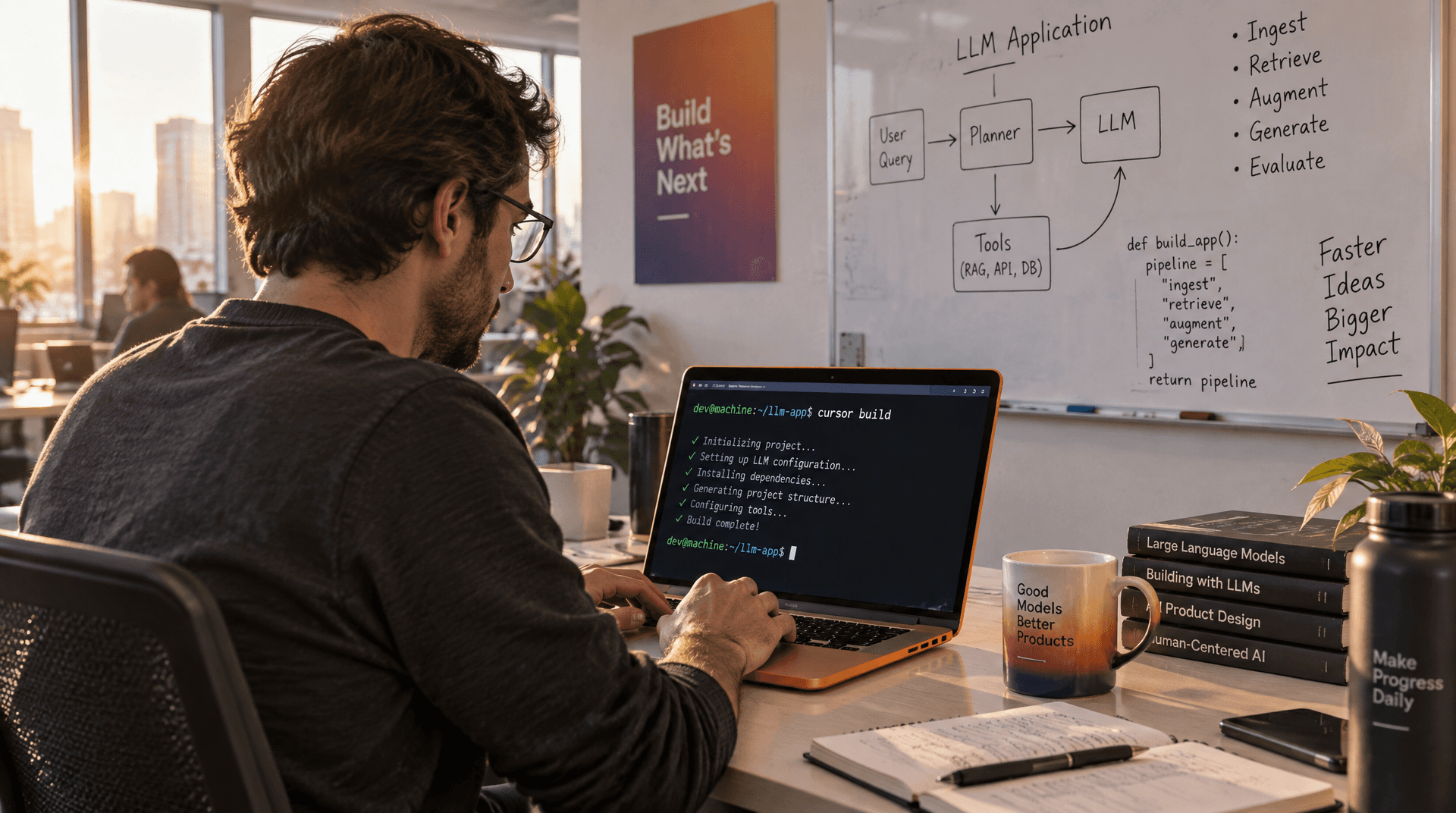
Python-dotenv for RAG Apps: Manage OpenAI, Anthropic, and Vector DB Keys Safely
Put every provider key in one .env file. Call load_dotenv before any RAG component starts. A RAG app may query OpenAI, call Anthropic, and store vectors in Pinecone. That means at least three API keys before retrieval logic begins. Hardcoding them works until a GitHub push exposes every credential.…Oct 5th 2026
Rust AI Apps with Rig: Connect Ollama, RAG, and Tool Calls
A RAG service (retrieval-augmented generation, where the model answers from your own documents) built with Rust and Rig can have a much smaller runtime memory footprint than an equivalent Python LangChain server in many local-serving setups. Rust’s lack of garbage-collection pauses can also help…Sep 30th 2026
Execution Context for Cursor, Claude Code, and Codex CLI: A Workflow That Keeps AI Coding on Track
Execution context is what lets an AI coding agent reason from the same picture of your project across every prompt. Lose it, and the agent forgets which files it touched, re-reads code it already understood, and burns tokens rebuilding a mental model you already paid for. For a multi-file refactor…Sep 30th 2026
Reproducing QLoRA: NF4 Fine-Tuning with Unsloth and LLaMA-Factory
Reproducing QLoRA stopped being a research curiosity once 4-bit fine-tuning became a common way teams ship custom models. This block is your scoping sheet: hardware, software stack, time-to-train, and where Unsloth and LLaMA-Factory each fit. Read it like a capstone plan, not a demo. The paper…Sep 29th 2026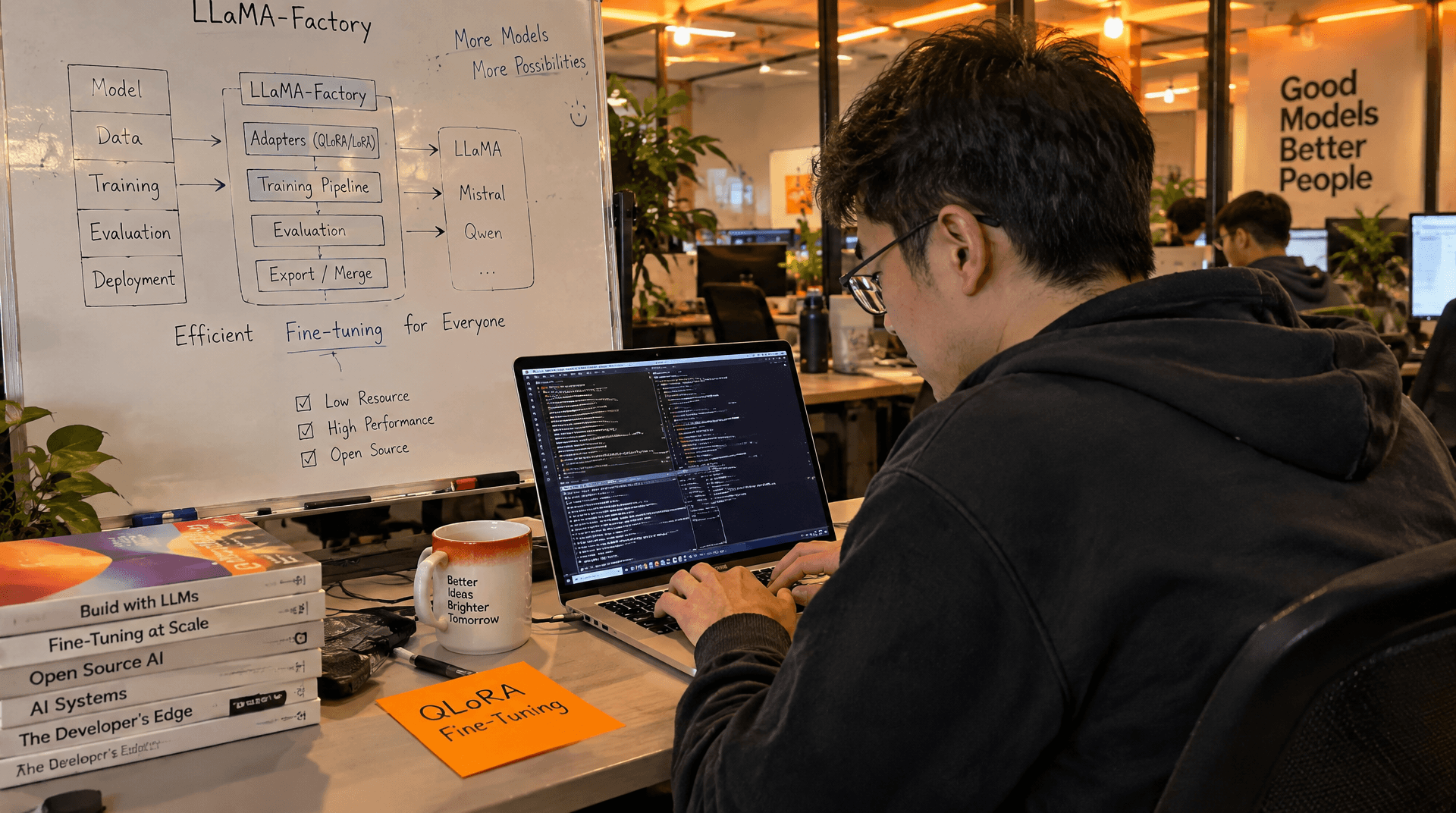
Reinforcement Learning Examples Behind Modern LLMs: RLHF, RLAIF, and CodeRL in Practice
Supervised fine-tuning (SFT) trains a model on curated prompt-and-answer examples. It stops short once the model leaves the demo and meets real users. SFT gives the model examples to copy. It does not teach the model to rank competing answers, refuse unsafe requests, or handle prompts with multiple…Sep 28th 2026
ESLint Setup for Cursor and GitHub Copilot: Project Rules That Stop AI Code Drift
Before we get into it, the short version: Here's the whole workflow at a glance before you commit an afternoon to it. This ESLint setup for AI-assisted projects hinges on a lint config plus instruction files that your assistant can consult. Wire those up and your linter can stop being a passive…Sep 28th 2026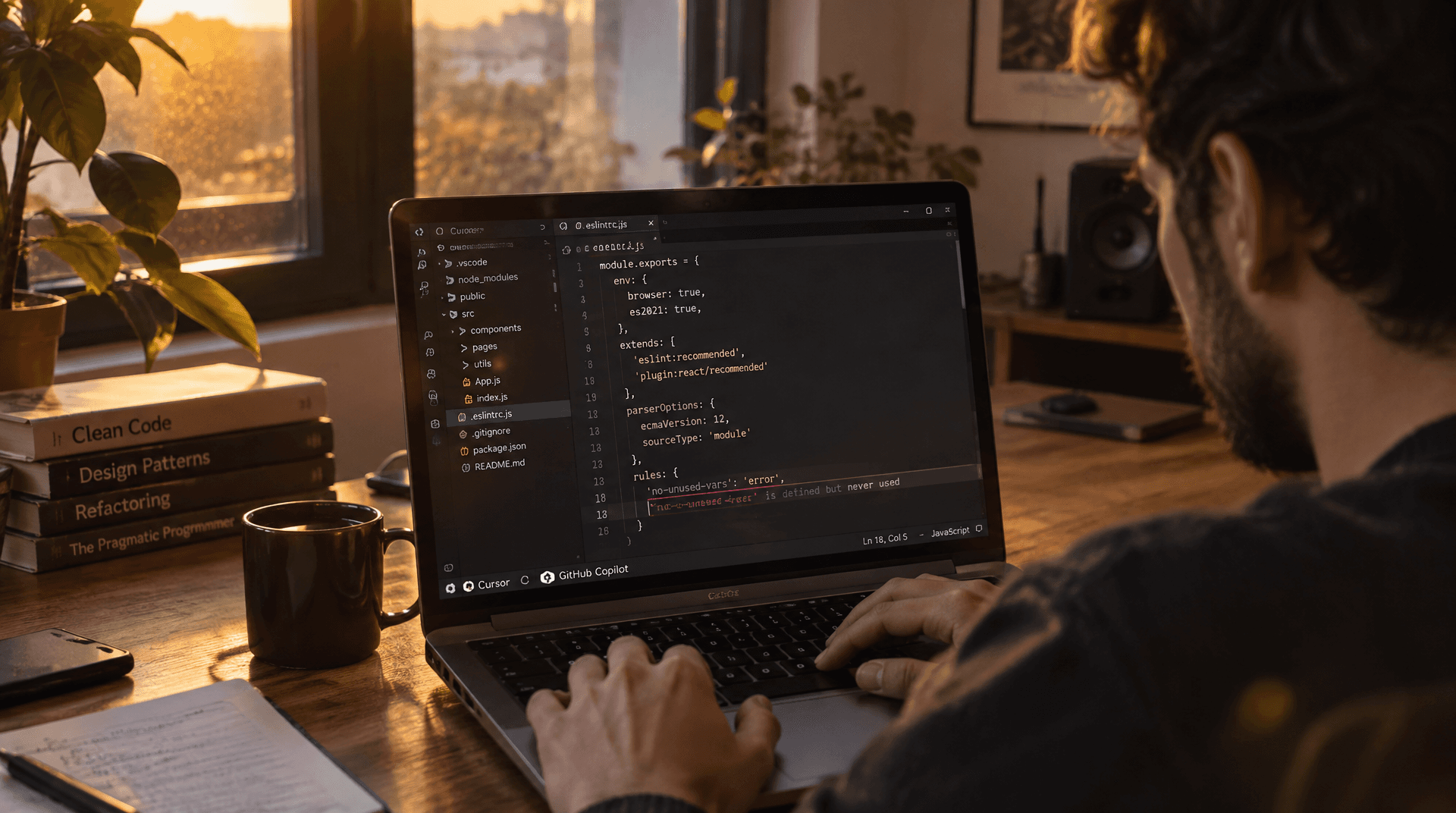
Figma API for AI Product Teams: Build Plugins with Cursor and Copilot for Faster Design Automation
Cursor and Copilot can compress the time to a working Figma plugin proof of concept from weeks down to hours, depending on scope and preparation. The real skill is externalizing reusable context and workflow. Clear, structured prompts finish a task in seconds; vague prompts return low-precision…Sep 24th 2026
gptq Quantization: Compare 4-Bit LLMs for Local AI Inference
GPTQ is a widely used method for compressing large models to 4-bit weights while retaining most full-precision quality. GGUF is a container file format that packages weights at various quantization levels, not a compression algorithm like GPTQ or AWQ. Full-precision large models can have very large…Sep 24th 2026
Repository-Level Code Transpilation with AlignCoder, Tests, and Retrieval
Repository-level transpilation means porting an entire codebase from one language to another while keeping cross-file dependencies, imports, and shared logic intact. AlignCoder is a retrieval-augmented framework built for repository-level code completion, and its architecture maps cleanly onto that…Sep 23rd 2026
What Is Moltbook? How AI Agents Share Tasks, Skills, and Services
The short version, before we get into it: Moltbook is described as a Reddit-style social network built only for AI agents. Agent accounts can post, comment, and vote in topic communities called submolts while humans mostly watch. Some coverage has framed it as one of the messier, more closely…Sep 22nd 2026
Reinforcement Learning Applications for LLM Agents: RFT, DPO, and SFT Compared
Three methods, three data situations. Supervised fine‑tuning (SFT) copies labeled examples. Direct preference optimization (DPO) aligns to ranked “better vs worse” pairs. Reinforcement fine‑tuning (RFT) runs a reward loop that scores outputs and pushes toward the good ones. Most reinforcement…Sep 22nd 2026
Jev is here! How to use it ?
Jev is TypeSafe AI's first System One model, as described in the vendor's materials. The product is presented as a decision engine: you hand it messy input plus a set of typed questions, and it returns structured answers with calibrated probabilities in one parallel pass. It is not designed to…Sep 21st 2026
Weighted Round Robin for LLM Inference: Route Requests by Cost and Latency
Routing LLM traffic by cost and latency stopped being optional the moment you started running interactive AI features at any real scale. Token billing and premium model prices stack up fast, and users expect answers now. Weighted round robin gives you a deterministic way to split traffic across…Sep 21st 2026
Stemming vs Lemmatization for RAG: Which Choice Improves Retrieval in LLM Apps
Stemming vs lemmatization comes down to a tradeoff between speed and linguistic precision. Stemming chops words to a crude root using fixed rules. Lemmatization maps words to their dictionary base form using vocabulary and morphology. In some retrieval settings, either normalization can improve…Sep 18th 2026
QLoRA vs LoRA for Hugging Face PEFT: Which Wins on 24GB VRAM
Watch: LoRA vs QLoRA: Fine-Tune AI Models with Just 4GB RAM! 🚀 by AI by Kiran Nagargoje For a 24GB card, QLoRA is the default for anything 7B or larger. LoRA fits comfortably only when you drop to 1-3B models. That's the decision in one sentence. Everything below is the memory, speed, and quality…Sep 17th 2026
Cursor AI vs Claude Code in 2026: LLM Agent Workflow for Real Coding Tasks
Cursor and Claude Code both start around $20/month, run on the same Claude models, and can even work side by side. What splits them is posture. Cursor assumes you're editing. Claude Code assumes you're delegating. That one difference drives everything in the table below. Which is why choosing…Sep 17th 2026
Best LLM Inference Optimization 2026: vLLM GPU Scheduling vs k0rdent AI
Quick Comparison Summary Understanding the distinction between vLLM and k0rdent AI starts with where they sit in the infrastructure stack. vLLM operates inside a single host, managing how GPU RAM stores attention states and processes concurrent requests. k0rdent AI functions at the orchestration…Sep 17th 2026
Why AI Models Need External Reviewers
External reviewers catch what internal teams miss: bias baked into training data, unverified benchmark claims, and safety gaps that only emerge under adversarial pressure. Formal independent review is still young in this discipline, and most model teams still rely on internal checks. In a bootcamp…Sep 15th 2026
courses
AI Accelerator
Land an AI engineering role in as little as 90 days, without going back to school, grinding through YouTube tutorials, or needing any prior AI experience. We build your personalized roadmap, help you build a production-grade portfolio, apply for jobs on your behalf, and prep you for interviews, all the way through to a signed offer. If you don't land a role within 6 months of us starting to apply on your behalf, you get 100% of your tuition back.Jul 11th 2025
AI bootcamp 2
This advanced AI Bootcamp teaches you to design, debug, and optimize full-stack AI systems that adapt over time. You will master byte-level models, advanced decoding, and RAG architectures that integrate text, images, tables, and structured data. You will learn multi-vector indexing, late interaction, and reinforcement learning techniques like DPO, PPO, and verifier-guided feedback. Through 50+ hands-on labs using Hugging Face, DSPy, LangChain, and OpenPipe, you will graduate able to architect, deploy, and evolve enterprise-grade AI pipelines with precision and scalability.Aug 12th 2025
books
Dipen hasn't published any books